
Paid Search That Targets Buyers

Who Are Ready to Find a Supplier

Every pound you spend on Google Ads should be reaching a procurement officer or engineer who is actively evaluating suppliers in your sector. When campaigns are built correctly for manufacturing, that is what happens. When they are not, you pay for traffic that never converts.
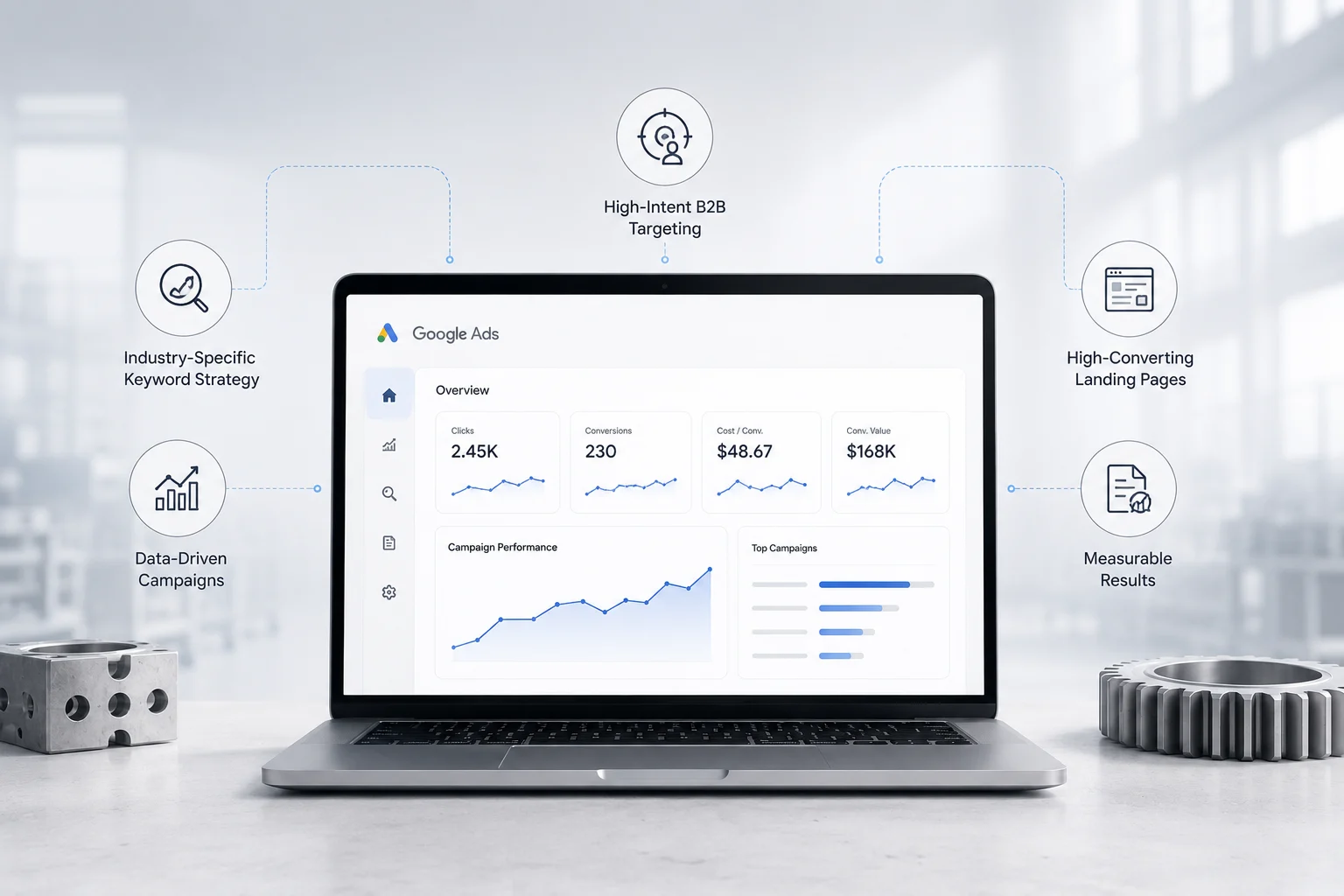
Google Ads.

Why Generic Google Ads Fail for Manufacturers

The most common failure we see in manufacturing Google Ads accounts is bidding on keywords that look relevant but attract the wrong audience.

'CNC machining' is not a buyer-intent search. It gets typed by students, researchers, and hobbyists far more than by procurement officers with live requirements. A campaign bidding on that term burns budget on people who were never going to submit an enquiry. The cost per qualified lead climbs to an unacceptable level and the campaign gets written off as not working for manufacturers. 'CNC machining company quote 5-axis titanium' is a completely different search.

That is a buyer with specific requirements who is ready to contact suppliers. Building campaigns around searches like this — and systematically excluding irrelevant traffic — is what makes manufacturing Google Ads work.

Leveraging Value-Based Bidding for Higher Technical ROI

In 2026, successful Industrial Ads require more than just keywords; they require "Smart Data." We implement Value-Based Bidding to feed Google’s AI the right signals. By connecting your technical lead value back to your B2B Google Ads account, we train the algorithm to find buyers who actually close, not just those who fill out a form.

Negative Keyword Engineering

We block thousands of "DIY" and "Educational" terms before your first dollar is spent.

Account-Based Search

Targeting specific industrial clusters and competitor brand names with surgical precision.

Sales Cycle Optimization

Remarketing strategies that keep your brand top-of-mind during long 6–12 month procurement cycles.
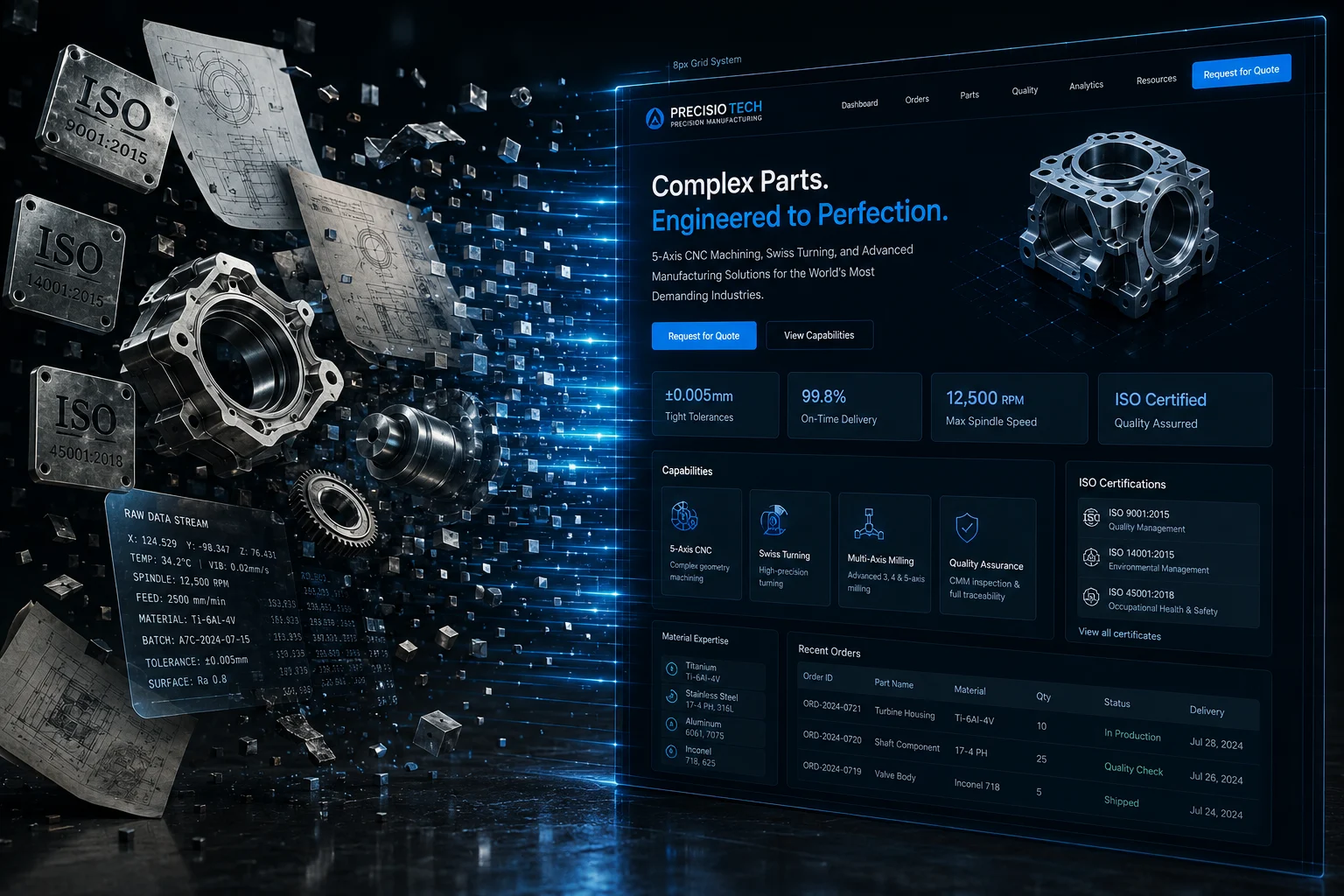
How We Build Manufacturing Campaigns

Information density without information overload

Keyword strategy — buyer-intent first

We start with buyer-intent keyword research: identifying the specific searches that indicate an active supplier evaluation. For manufacturing these are typically specification-level searches — material type combined with process, capability combined with certification, or process combined with 'quote' or 'supplier.

Before the campaign launches, we build a thorough negative keyword list. This excludes every category of non-buyer traffic: job seekers, students, hobbyists, researchers, and consumer-level searches in your category. The negative list is often the most impactful work we do on a new manufacturing account.

Ad copy for procurement professionals

Manufacturing buyers do not respond to consumer-style advertising. Capability statements, certification callouts, specific process types, and delivery capability — that is what resonates with a procurement officer evaluating a supplier for a high-value contract. We write ad copy that confirms immediately to the buyer that this is a relevant supplier, and gives them enough specific information to click with confidence.

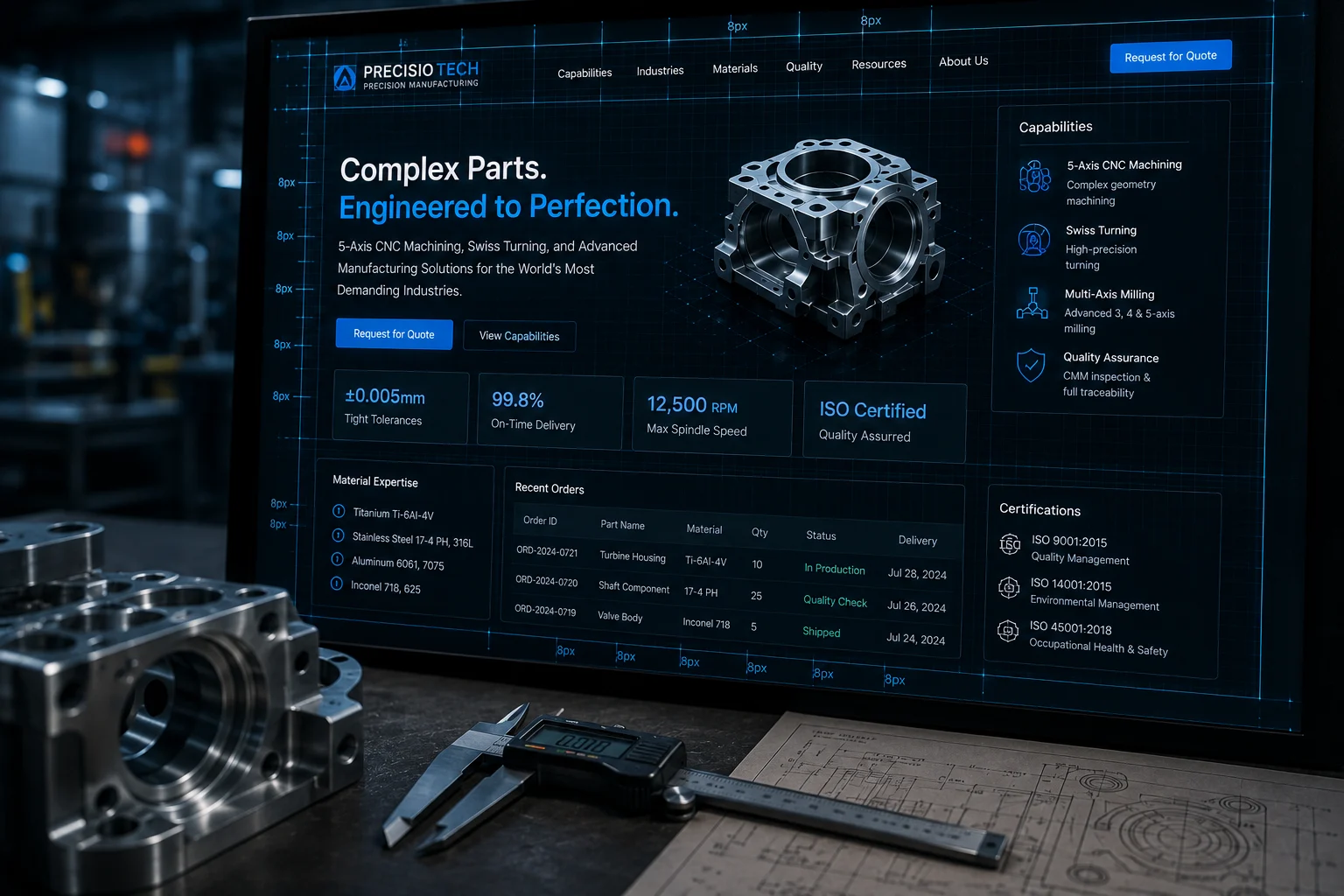
Design that signals precision

Landing page alignment

The page a buyer lands on after clicking your ad determines whether the click converts to an enquiry. A buyer who clicks on '5-axis CNC machining titanium components' needs to land on a page that immediately confirms your 5-axis capability, shows your material range including titanium, and makes it easy to submit an enquiry with their specific requirements.

We audit the landing pages for every campaign before it launches. If an existing page will not convert the traffic we are sending, we recommend specific changes — or build a dedicated landing page as part of the engagement.

Conversion tracking and attribution

Every campaign we manage has proper conversion tracking from day one. We track enquiry form submissions, phone call initiations, and email link clicks — and we attribute each conversion back to the campaign, ad group, and specific keyword that generated it.

Monthly reporting is built around this data: cost per qualified enquiry, conversion rate by keyword, and specific recommendations for the following month. We report on what matters to your business — not impressions and clicks.

Design that signals precision

What are the Specialized Google Ads Included

Keyword research and negative list

Buyer-intent keyword identification and pre-launch negative keyword architecture — built before the campaign goes live

Campaign and ad group structure

Structured around the manufacturing buying process, not generic keyword categories

Ad copy

Written for procurement and engineering buyers — factual, capability-specific, credibility-focused

Landing page audit

Review of existing pages with specific recommendations, or dedicated landing page build where needed

Bid strategy setup

Configured for high-ticket B2B conversion, not low-cost-per-click at the expense of lead quality

Conversion tracking

Enquiry forms, calls, and email links tracked and attributed to campaign, ad group, and keyword

Search term monitoring

Ongoing review and negative keyword additions throughout the engagement

Monthly reporting

Enquiry volume, cost per lead, conversion rate, search term data, and next-month recommendations

Direct access

You communicate with the person managing the campaign — not an account manager who relays messages

A successful partnership handshake between a Pixerts digital growth consultant and an industrial leader, representing the close of a manufacturing RFQ deal.

Connect with Pixerts to get expert consultation.

Common Questions for Industrial B2B Google Ads

Is Google Ads worth it for a manufacturing company?

Yes — when built correctly for the manufacturing buying cycle. Campaigns targeting broad category keywords produce poor results. Campaigns targeting specification-level, buyer-intent search terms consistently deliver qualified enquiries at a measurable cost. The difference is understanding which keywords indicate an active supplier evaluation versus which indicate general curiosity.

Well-structured industrial campaigns typically generate the first qualified enquiries within 2 to 4 weeks of launch. Full optimization — negative keyword refinement, bid adjustments, landing page testing — takes 60 to 90 days to reach peak performance.

This depends on your target keywords and geography. We will tell you honestly what budget is needed to generate meaningful results in your specific situation — and we will not take on a campaign where the budget is too low to produce useful data. We do not run campaigns that are set up to fail.

Yes — and this is the most effective approach for manufacturing companies. Google Ads delivers results immediately while SEO builds over months. The channels also inform each other: keywords that convert in paid search guide which terms to prioritize in SEO, and the content we create for SEO improves the landing pages we use in paid campaigns.

Yes. Most manufacturing campaigns we inherit have structural issues — too-broad keyword targeting, insufficient negative keyword lists, ad copy not written for procurement buyers, and landing pages that do not match buyer intent. We audit the account before making changes, implement fixes in a structured way, and typically see meaningful improvement within 60 days of taking over.

Ready to Generate Manufacturing Inquiries Through Paid Search?

Tell us your sector, your target geography, and a rough sense of your budget. We will come back with a clear proposal for a campaign structure that targets the buyers who are ready to find a supplier like you.


Two professional designers working on a high-fidelity B2B manufacturing website design, showcasing the benefits of a specialized industrial web design agency.
We Chat QR Code